



I’ve helped many people stand out in the job market. I’m excited to share key techniques. Your job application is your first chance to impress a future employer. So, it’s very important to do it well.
Making a strong resume is key to finding new opportunities. In this article, I’ll show you how to make a resume that highlights your skills and experience.
Key Takeaways
- Understand the importance of tailoring your resume to the job application.
- Learn how to highlight your relevant skills and experience.
- Discover the essential components of a compelling resume.
- Get tips on how to make your resume stand out in a competitive job search.
- Understand the role of a well-crafted resume in securing an interview.
Understanding the Importance of a Strong Resume
Your resume is often the first thing a hiring manager sees. It’s key to show your skills, experience, and achievements well.
Why Your Resume Matters
A good resume shows your professional and career highlights. This makes it easy for hiring managers to see your worth.
A strong resume can really help you stand out. It’s not just about listing jobs. It’s about showing what you’ve achieved and how you’ve made a difference.
The Role of a Resume in Job Applications
In job applications, your resume is very important. Hiring managers and recruiters usually look at it first.
A resume that matches the job description can boost your chances of getting an interview.
Common Misconceptions About Resumes
Many think a resume should list all their work experience. But that’s not right.
A good resume is short and focuses on the most important experience and skills.
| Characteristics | Good Resume | Bad Resume |
|---|---|---|
| Length | 1-2 pages | More than 2 pages |
| Content | Focused on achievements | Lists job responsibilities |
| Customization | Tailored to the job | Generic |
In conclusion, a strong resume is key for job seekers. By making a resume that clearly shows your value, you can do better in the job market.
Essential Components of a Resume
Resume writing has key elements that can help you get an interview. A good resume shows your skills, achievements, and background. It’s more than just listing your jobs.
Contact Information: What to Include
Your contact info is the first thing employers see. So, it’s important to get it right. Include your full name, a professional email, and a phone number. You might also add your LinkedIn profile or website if it’s relevant.
Key details to include:
- Full name
- Professional email address
- Phone number
- LinkedIn profile or personal website (if applicable)
Crafting a Strong Summary Statement
Your summary statement is your chance to stand out. It should be a brief overview of your professional brand. Highlight your biggest achievements and experiences. Make sure it matches the job you’re applying for.
Tips for a compelling summary:
- Keep it concise, ideally no more than 2-3 sentences
- Use action verbs and keywords from the job description
- Highlight your unique value proposition
Highlighting Work Experience Effectively
Your work history is key in your resume. Focus on achievements, not just job duties. Use numbers and metrics to show your impact.
| Best Practices | Examples |
|---|---|
| Use action verbs | Managed, Created, Developed |
| Quantify achievements | Increased sales by 25%, Reduced project time by 30% |
| Highlight soft skills | Team leadership, Problem-solving |
Don’t forget the skills section. List your relevant skills here. Make sure they match the job description. This helps ATS and hiring managers see your fit.
Tailoring Your Resume for Different Jobs
To stand out in a tough job market, you need to make your resume fit each job perfectly. It’s not just about small changes. You must really understand the job and show how your skills match what they need.
Researching Job Descriptions
Start by studying the job description carefully. Look for the main qualifications and tasks needed. Pay attention to keywords and phrases that keep popping up. These are key to what the employer wants.
For example, if a marketing job keeps talking about “social media marketing,” “SEO,” and “content creation,” make sure your resume shows you know these things.

Keywords: The Secret to Specialization
Keywords are very important. They help your resume get past computer systems and catch the eye of the hiring manager. By using the right keywords from the job description, you boost your chances of moving forward.
Identify keywords by looking at nouns and verbs in the job posting. For a software developer job, keywords might be “Java” or “Python,” “Agile,” and certain technologies.
Customizing Your Skills Section
Your skills section should focus on what’s most important for the job. Don’t stretch the truth, but do highlight the skills that match the job best.
For a graphic design job, list your skills in Adobe Creative Suite, like Photoshop and Illustrator. If the job wants UI/UX design experience, show that if you have it.
| Job Title | Key Skills Required | How to Tailor Your Resume |
|---|---|---|
| Marketing Manager | Social media marketing, SEO, content creation | Highlight your experience in social media campaigns, SEO strategies, and content creation. Use specific metrics to demonstrate the success of your campaigns. |
| Software Developer | Programming languages (Java, Python), Agile methodologies | List your proficiency in the required programming languages and describe your experience with Agile development methodologies. Include projects that demonstrate your skills. |
| Graphic Designer | Adobe Creative Suite, UI/UX design | Emphasize your proficiency in Adobe Creative Suite, specially in Photoshop and Illustrator. If you have experience with UI/UX design, highlight this and include examples of your work. |
Choosing the Right Resume Format
It’s key to know the different resume formats to make a good job application. The format you pick can really change how the hiring manager sees your info.
Chronological vs. Functional Resumes
A chronological resume puts your work history first, starting with your latest job. It’s great for those with a solid work history in their field. A functional resume, though, highlights your skills and qualifications, not your work history. It’s good for those with job gaps or changing careers.
Chronological Resume: Best for those with lots of experience in their field.
Functional Resume: Good for career changers or those with job gaps.
When to Use a Combination Format
A combination resume shows both your work history and skills. It’s flexible and can be adjusted for different jobs. It’s perfect for those who want to show off specific skills and their work experience.
- Highlight your relevant skills and experience.
- Use it when you’re changing careers or industries.
- Ideal for those with a strong work history and relevant skills.
Design Elements to Consider
The design of your resume matters a lot. A well-designed resume can really stand out to employers. Use a clean, professional look and make sure it’s easy to read.
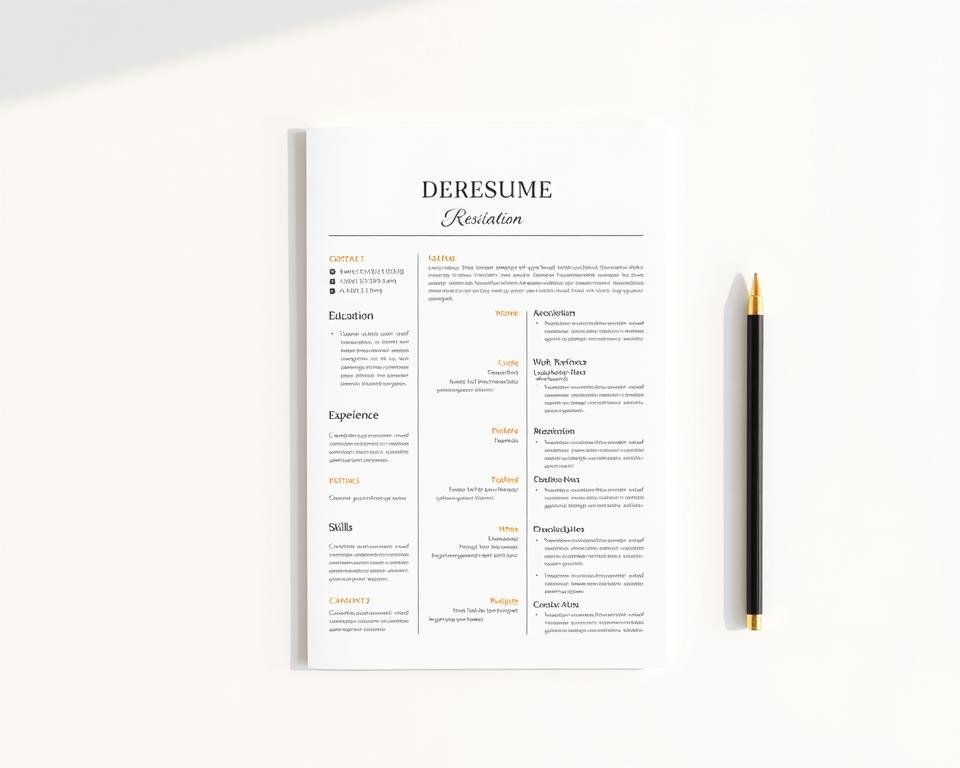
Some important design elements include:
- Clear headings and bullet points.
- A consistent font throughout.
- Appropriate use of white space to avoid clutter.
Key Skills to Showcase on Your Resume
To stand out, it’s key to show your skills well on your resume. Your skills section is very important. It can help you get an interview.
It’s important to know the difference between hard and soft skills. Hard skills are things you learn in school or training, like coding or marketing. Soft skills are about how you work with others, like teamwork or communication.
Hard Skills vs. Soft Skills
Both hard and soft skills are important. Hard skills show you can do specific tasks. Soft skills show how you work with others and manage your time.
For example, a software developer should list their coding skills as hard skills. They should also talk about their teamwork skills as a soft skill.
How to Identify Transferable Skills
Transferable skills are useful in many jobs and fields. Finding these skills can make your resume better. Think about your past jobs, school, or volunteer work. See how the skills you used there can help in your new job.
Skills like project management, problem-solving, and leadership are great. If you’ve managed a team or led a project, you can use these skills in many fields.
Quantifying Achievements for Impact
Just listing skills isn’t enough. You need to show how you’ve made a difference. Use numbers and stats to show your results. For example, say “increased sales by 25%,” not just “increased sales.”
Here’s an example of how to quantify achievements:
| Skill | Achievement | Quantified Result |
|---|---|---|
| Marketing | Increased website traffic | Boosted website traffic by 50% in 6 months |
| Sales | Improved sales figures | Achieved a 30% increase in sales within a year |
| Project Management | Successfully managed projects | Delivered 95% of projects on time and within budget |
By showing your achievements with numbers, you prove your skills. This makes your resume more interesting to employers.
The Role of Education in Your Resume
Your education is key in making a strong resume. It shows employers if you’re ready for the job.
When you talk about your education, focus on courses that match the job. This shows you’re prepared for the role.
Highlighting Relevant Coursework
To show off relevant courses, list the ones that fit the job. For example, if you’re applying for a marketing job, highlight digital marketing or market research courses.
Here’s how to show relevant coursework:
| Course Name | Relevance to Job |
|---|---|
| Digital Marketing Strategies | Understanding online marketing techniques |
| Market Research Methods | Analyzing consumer behavior and market trends |
By highlighting relevant courses, you make your career summary stronger. It shows you have the right skills and knowledge.
Certifications and Additional Training
Certifications and extra training can also boost your resume. They show you’re serious about growing professionally. Employers often find this appealing.
For example, getting certified in software or tech can be a big plus. List these certifications, along with who gave them and when.

When to Leave Education Off
Education is important, but sometimes it’s better to leave it out. If your work history is more relevant, focus on that.
If you’re switching careers, your work and skills might be more important. Highlight what you’ve learned and done.
Deciding whether to include education depends on your situation and the job you want.
The Do’s and Don’ts of Resume Writing
Writing a good resume is like a dance. It’s about showing off your best and avoiding mistakes. Knowing what to do and what not to do is key in a tough job search world.
Avoiding Common Pitfalls
One big thing to avoid is mistakes that can hurt your chances. These include:
- Typos and grammatical errors that suggest a lack of attention to detail
- Overly generic resumes that fail to highlight your unique strengths
- Inconsistent formatting that makes your resume hard to read

Positive Phrasing Techniques
How you write your resume matters a lot. Using strong verbs can make your experience sound exciting. For example, say “led a team to achieve outstanding results” instead of “managed a team.”
This shows off your skills and what you can do for a company.
The Importance of Proofreading
Proofreading is very important but often forgotten. A small mistake can make you look careless. So, take your time to check your resume carefully.
Or even better, ask someone else to look at it too. This way, you can be sure your resume is perfect. A good resume and a matching cover letter can really help you stand out in your job search.
Effective Use of Action Verbs
Action verbs make your resume better. They show what you’ve done and what you’re good at. This helps employers see your value.
Examples of Powerful Action Verbs
Choosing the right action verbs is key. Here are some strong ones for your resume:
- Managed a team of 10 people, improving productivity by 25%
- Created a new marketing strategy, resulting in a 50% increase in sales
- Developed and implemented a new software solution, reducing project timelines by 30%
- Increased customer satisfaction ratings by 40% through improved customer service

How Action Verbs Enhance Your Resume
Action verbs make your resume clear and interesting. They show what you’ve done and what you’re good at. This grabs the attention of hiring managers.
| Action Verb | Example | Impact |
|---|---|---|
| Managed | Managed a cross-functional team | Demonstrates leadership skills |
| Created | Created a new product line | Highlights innovation and creativity |
| Improved | Improved process efficiency by 20% | Shows ability to analyze and optimize processes |
When and How to Use Them to Your Advantage
Use action verbs to talk about your achievements. Match them to the job you want. This shows you’re a good fit.
For example, say “managed a team of 10, achieving a 25% increase in productivity.” This shows you can manage and get results.
By using strong action verbs, you can stand out in a crowded job market.
Final Touches Before Sending Your Resume
Before you send your resume, make sure it looks professional. A well-organized CV can really help your job search. Check your resume’s layout to make sure it’s clean and easy to read.
Tips for a Professional Layout
Choose a standard font like Arial or Calibri. Keep it the same throughout your CV. Good formatting makes your achievements shine.
Creating a PDF Version
Save your resume as a PDF. This keeps the layout the same on all devices. It’s key when applying online, as it shows your CV looks great.
Following Up
After sending your resume, follow up with the employer. Show them you’re really interested in the job. This keeps you in their thoughts during the hiring process.
