



I’m excited to share my top tips for working from home. These tips help you stay productive and focused.
Flexible work is more common now. It’s key to learn how to work well from home. A few strategies can help you keep up with work and enjoy your life too.
Using these tips, you’ll handle remote work challenges better. You’ll do great in this new work world.
Key Takeaways
- Effective time management is key for remote work success
- Having a dedicated workspace helps you stay focused
- Regular breaks boost productivity and well-being
- Staying in touch with your team is vital
- Setting clear boundaries with family and friends is essential
Understanding the Benefits of Remote Work
Remote work brings big perks like saving money and finding more talent. It’s key for both workers and bosses to get this.
Flexibility and Work-Life Balance
Remote work means more freedom. No daily commute means more time for you. It’s great for those who care for family or like working from anywhere.
Key benefits of flexibility in remote work include:
- More focus at work because of fewer distractions
- Being happier at work because you can choose your spot
- Having a better balance between work and life with flexible hours
Cost Savings for Employees and Employers
Remote work saves money for both sides. Workers save on travel, clothes, and food. Bosses save on office space and bills. A study by Global Workplace Analytics found employers save about $11,000 a year for each half-time remote worker.
Some of the cost savings associated with remote work include:
- Less money spent on office stuff for bosses
- Less money spent on travel for workers
- Less need for office supplies and gear
Access to a Global Talent Pool
Remote work lets bosses find talent worldwide, not just locally. It’s a chance to work with people from all over. Workers get to join diverse teams and grow their network.
Knowing the perks of remote work, like remote jobs and remote work flexibility, helps everyone adapt to the changing work world.
Establishing a Productive Workspace
A well-designed home office can make remote work better. It’s easy to get sidetracked by household tasks. But, a dedicated space helps keep work and personal life separate.
Ergonomics: Choosing the Right Setup
Getting an ergonomic setup is key for comfort and work. Use a comfy, adjustable chair and a desk that helps your posture. Think about a standing desk to switch between sitting and standing.
A good ergonomic setup stops back pain and eye strain. For example, having your monitor 20-25 inches away helps your eyes.
Decluttering for Mental Clarity
A messy space can mess with your mind. To stay clear, clean your workspace often. Get rid of things you don’t need, organize files, and keep it neat.
- Sort through your papers and files, and either file them away or recycle/shred them as needed.
- Keep your most frequently used items within easy reach.
- Use storage solutions such as shelves or drawers to keep your workspace organized.
Personalizing Your Environment
Make your space your own to boost motivation. Add family photos, artwork, or plants to make it welcoming.
Use a vision board or a motivational quote to inspire you. By making your space unique, you create a positive work environment.
Essential Tools for Remote Collaboration
Working together from afar needs the right tools. With more people working remotely, having the best tech is key. It helps teams work well together.
Good teamwork starts with communication. For teams working from home, using platforms for quick chats is important.
Communication Platforms: Zoom and Slack
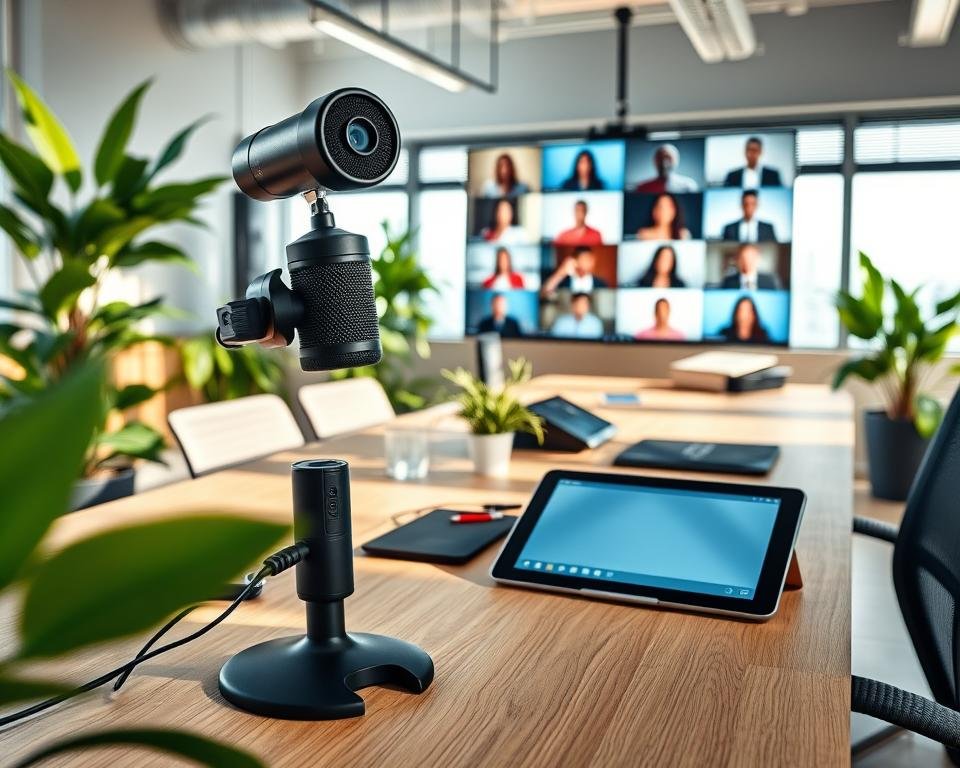
Zoom and Slack change how teams talk. Zoom is great for video calls. Slack is for quick messages and sharing files.
- Zoom: Perfect for virtual meetings and sharing screens.
- Slack: Allows fast messaging and works with many tools.
Project Management Software: Trello and Asana
Managing projects is simpler with Trello and Asana. These tools help teams plan tasks, track progress, and hit deadlines.
| Tool | Features | Benefits |
|---|---|---|
| Trello | Boards, lists, cards | Visual project management |
| Asana | Task assignments, deadlines | Boosts team productivity |
File Sharing Solutions: Google Drive and Dropbox
Sharing files is key for remote teams. Google Drive and Dropbox make it safe and easy to share documents.
- Google Drive: Works with Google Docs for editing together.
- Dropbox: Has strong file sharing and storage.
Using these tools, remote teams can work better together. They improve communication, manage projects well, and share files easily. The right tools are vital for teamwork in virtual settings.
Time Management Strategies for Remote Workers
Good time management is key for remote work success. It helps you stay focused and meet your goals. Remote workers often face challenges like home distractions or missing a structured work space.

To beat these challenges, you need efficient time management strategies. Here are some tips to help you.
The Pomodoro Technique
The Pomodoro Technique is about working in 25-minute focused sessions. Then, take a 5-minute break. This keeps your work pace steady and prevents burnout.
This method is simple and flexible. You can change the work and break times to fit your needs. It works well for different tasks and work styles.
Time Blocking for Increased Focus
Time blocking schedules tasks into fixed, uninterrupted blocks. It helps you focus, avoid multitasking, and cut down on distractions.
- Identify your most critical tasks and allocate specific time slots for them.
- Use a calendar or planner to schedule your tasks and set reminders.
- Minimize meetings and learn to say “no” to non-essential commitments that can derail your schedule.
Prioritizing Tasks with the Eisenhower Matrix
The Eisenhower Matrix helps you sort tasks by urgency and importance. It divides tasks into four areas. This way, you focus on what’s most important.
This tool is great for remote workers. It helps manage tasks well and lowers stress. By prioritizing tasks, you use your time and energy wisely.
Maintaining Motivation While Working Remotely
Working from home can be great, but staying motivated is key. The comfort and flexibility can sometimes make us slack off. But, with a few strategies, I’ve kept my motivation up and hit my goals.

Setting Daily Goals
Setting daily goals is a big help. I start each day with a list of tasks. I break big tasks into smaller ones. This keeps me focused and makes me feel good when I finish each task.
Finding an Accountability Partner
Having an accountability partner is also super helpful. It could be a coworker, friend, or family member. They check in with me to talk about my progress and any problems. Knowing someone is watching my back keeps me on track.
Rewarding Yourself for Achievements
Another thing that works for me is rewarding myself for my hard work. When I finish a tough task or hit a milestone, I take a break. I do something fun or relaxing. This break is not just a reward but also helps me keep up good work habits.
These strategies have really helped me stay motivated while working from home. Setting goals, having someone to report to, and rewarding myself are all key. They’ve been super helpful in keeping me motivated and productive.
Effective Communication in a Remote Setting
Remote work is growing fast. Good communication in virtual teams is key. Without face-to-face talks, misunderstandings can happen if we’re not careful.
To solve these problems, we need to talk clearly and listen well. We should be clear in what we say, listen to our team, and fix any communication blocks.
Clear and Concise Messaging
In virtual work, it’s important to be clear and simple. Avoid using hard words that might confuse others. Simple language helps everyone understand us better.
Best practices for clear messaging include:
- Defining the purpose of the message upfront
- Using bullet points or numbered lists when conveying multiple items
- Avoiding ambiguity by being specific
Active Listening Skills
Listening well is key in remote work. It helps us catch what’s not said and respond thoughtfully. This is harder without seeing each other’s body language.
To improve active listening, consider:
- Giving the speaker your undivided attention
- Asking clarifying questions to ensure understanding
- Paraphrasing or summarizing the speaker’s message to confirm comprehension

Overcoming Communication Barriers
Even with the best plans, communication problems can pop up in virtual work. These might be tech issues, language differences, or missing nonverbal signs. Knowing these problems helps us solve them.
| Barrier | Solution |
|---|---|
| Technological Issues | Have backup plans such as alternative internet sources or communication platforms. |
| Language Barriers | Use translation tools or provide written summaries in meetings. |
| Lack of Nonverbal Cues | Use video conferencing to convey body language and facial expressions. |
By using these strategies, we can make our remote work communication better. This keeps our teams connected, working well together, and productive.
Combatting Isolation in Remote Work
Remote work has shown us the need to fight isolation and build community. It can feel both freeing and lonely at the same time.
Creating chances for socializing is key to fight loneliness. Joining virtual meetups and networking events is a great way to do this.
Joining Virtual Meetups and Networking Events
Virtual events let remote workers meet others in their field. They can share stories and make friends. For example, going to virtual conferences or joining online groups has helped me a lot.
These events offer real chances to talk and feel connected to others in your field.
Regular Check-ins with Team Members
Staying in touch with your team is important for working together. Setting up regular video calls or chats helps keep everyone close. It makes sure everyone is working together well.
Tools like Zoom and Slack make it easy to keep in touch with your team. They help you feel part of the group.
Engaging in Team Building Activities
Even online, team activities can make a big difference. Things like virtual happy hours or team lunches help everyone get along better. They make your team stronger.

Doing these activities helps fight loneliness. It makes remote workers feel more connected to their team.
In summary, fighting isolation in remote work needs many steps. Joining online events, staying in touch with your team, and doing team activities are important. These actions make remote work better and help keep a good balance between work and life.
Balancing Work and Personal Life
It’s key to balance work and personal life when working from home. I’ve found that setting clear boundaries is vital. This helps keep work and personal time separate.

Setting Boundaries for Work Hours
Setting clear work hours is a great way to balance. I have a specific workspace and a routine for work and breaks. Starting my day at the same time every morning helps.
Regular breaks refresh my mind. This way, I can focus on work without personal tasks getting in the way.
Creating a Relaxation Routine
Having a relaxation routine is also important. Activities like meditation, reading, or walks help me unwind. I enjoy yoga in the evening to switch from work to relaxation.
- Meditation or deep breathing exercises
- Engaging in a hobby or creative activity
- Taking a short walk or doing some light exercise
Unplugging After Work Hours
It’s important to unplug after work. I avoid work tasks and limit tech use outside work hours. This ensures I’m rested for the next day.
Creating a healthy work-life balance is essential. It lets me enjoy remote work without losing personal well-being.
Managing Distractions While Remote
Working from home can be tough. It’s hard to stay focused when you can do anything you want. But, it’s key to keep distractions away.

Identifying Common Distractions
Household chores and family can easily distract you. Other common distractions include:
- Social media and email notifications
- Household chores and errands
- Family members or roommates
- Personal hobbies or interests
Techniques for Staying Focused
Here are some ways to stay on track:
- Make a dedicated workspace that’s quiet and free from interruptions.
- Use website blockers or apps to help you stay focused.
- Set clear work hours with family and friends.
- Break tasks into smaller, easier-to-manage pieces.
Using Noise-Canceling Tools
Noise-canceling tools are super helpful for remote workers. They help by:
| Tool | Benefit | Example |
|---|---|---|
| Noise-canceling headphones | Blocks out background noise | Bose QuietComfort |
| Background noise apps | Creates a consistent, distraction-free environment | Noisli |
| Soundproofing materials | Reduces ambient noise | Acoustic panels |
By knowing what distracts you, using focus techniques, and using noise tools, you can work better from home.
Embracing a Growth Mindset
Working remotely has taught me the value of a growth mindset. It’s key for keeping up with changes in remote jobs and virtual work.
A growth mindset means being ready for new challenges. It’s about always wanting to learn and grow.
Continuous Learning Opportunities
Looking for ways to keep learning is part of a growth mindset. This can mean taking online courses, going to webinars, or reading industry news.
- Online courses on platforms like Coursera or Udemy
- Webinars hosted by industry leaders
- Subscribing to relevant newsletters and blogs
By always learning, I can get better at my job and stay ahead in virtual work.
Seeking Feedback for Improvement
Another important part of a growth mindset is asking for feedback. It’s about being open to helpful criticism to get better.
Asking for feedback from coworkers and bosses helps me see where I can improve. It shows me how to do better in remote jobs.
Key strategies for seeking feedback include:
- Regular check-ins with team members
- Using feedback tools and platforms
- Being proactive in asking for feedback
Adapting to Changes in Remote Work Culture
The remote work culture keeps changing, with new tools and ways of working coming out all the time. Being able to adapt is key to success in virtual work.
Being flexible and open to change helps me handle the shifts in remote work better.
Keeping up with the latest in remote work culture and being open to new ideas helps me stay ahead.
Recognizing Burnout in Remote Workers
Remote work offers flexibility but also risks burnout. Burnout is feeling emotionally, mentally, and physically drained. Knowing the signs early is key.
Signs and Symptoms of Burnout
Burnout shows up in many ways. Common signs are feeling tired all the time, being cynical at work, and not being productive. Spotting these signs early helps a lot.
- Feeling exhausted or depleted of energy
- Increased cynicism and detachment from work
- Reduced performance and productivity
Spotting these signs early can help prevent burnout.
Strategies for Recovery
Recovering from burnout needs self-care, setting boundaries, and support. Here are some tips that work:
| Strategy | Description | Benefit |
|---|---|---|
| Regular Breaks | Taking short breaks throughout the day | Reduces stress and increases focus |
| Exercise Routine | Engaging in physical activity regularly | Improves mood and energy levels |
| Boundary Setting | Clearly defining work and personal time | Enhances work-life balance |
When to Seek Professional Help
If burnout lasts even after trying recovery strategies, get professional help. A mental health expert can offer personalized support.
Being proactive about burnout helps remote workers stay well. This way, they can keep enjoying the flexibility of working from home.
Future Trends in Remote Work
Remote work is changing fast, thanks to new tech and more people working from home. We’ll see more hybrid work models soon. These mix the best of working from home and the office, giving us more flexibility and better work-life balance.
Hybrid Models on the Rise
Hybrid work is becoming more common. It lets people work from home some days and in the office others. This way, teams can work better together, be more creative, and get more done.
Technological Advancements
New tech like AI and automation will keep changing remote work. They’ll open up new job chances and make working from home even better.
Future Opportunities
Remote work will keep growing, bringing new chances like virtual reality training and AI tools for managing projects. By going with these trends, we can make remote work even better. It will be more flexible, productive, and team-friendly.
