


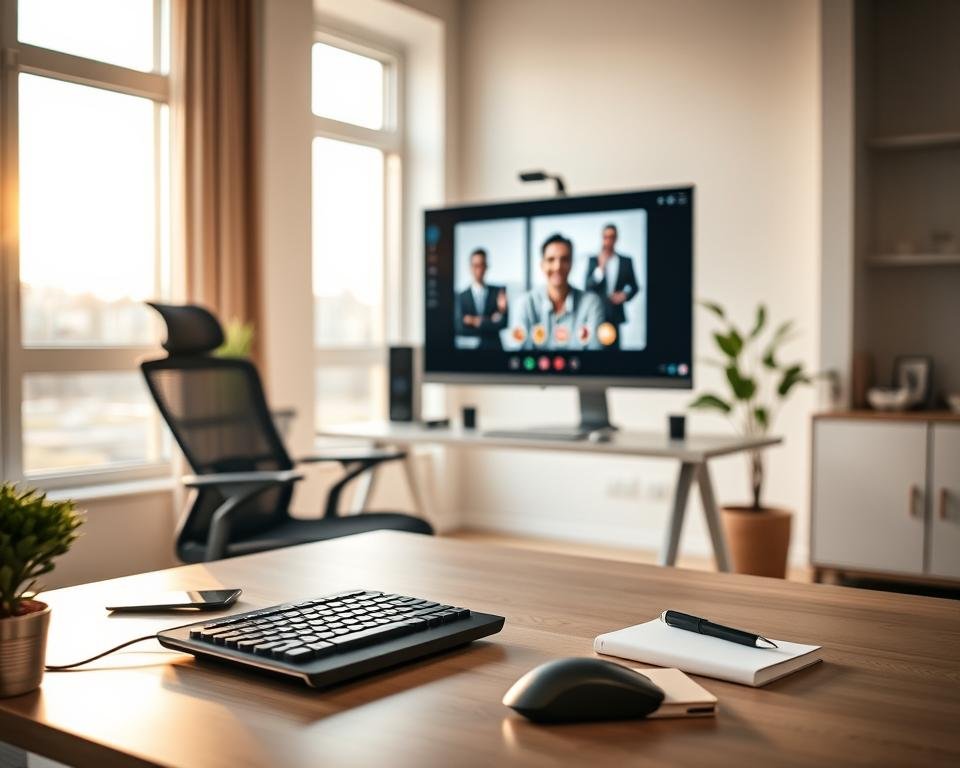
Working from home has changed how we work. It needs special skills and strategies to stay productive and connected. In this article, I’ll share key techniques for doing well in a remote job.
Knowing how to work from home and using its flexibility is key. I’ll talk about important tools, time management tips, and how to communicate well.
Learning these skills can make your work better and help you reach your goals. This article is for anyone new to remote work or looking to get better at it.
Key Takeaways
- Essential techniques for remote work success
- Tools and strategies for effective time management
- Communication skills for remote teams
- Leveraging flexibility in remote work
- Understanding remote work dynamics
Understanding Remote Work Dynamics
Remote access is now common. It’s important to know how it works. Remote jobs are changing how we work.
Remote work means you can work from anywhere, not just an office. It gives you flexibility and autonomy. This lets you plan your work better.
What is Remote Work?
Remote work uses technology to do job tasks from anywhere. It’s common to work from home or a coffee shop. You need digital tools and self-motivation.
Benefits of Working Remotely
Remote work has big benefits. It saves time on commuting. This means you can do more work or personal things. It also makes you more productive, as you focus better without office distractions.
- Reduced commuting time
- Increased flexibility
- Improved work-life balance
Challenges Faced by Remote Workers
Remote work has challenges too. Feeling isolated is common. You miss social interactions and feel out of touch with your team.
Working from home can also blur work and personal life. This can lead to burnout. To avoid this, create a dedicated workspace and stay in touch with your team.
Essential Tools for Remote Work
Working from home needs the right tools. I’ve learned that good tools boost productivity and efficiency.
Communication Platforms
Good communication is key for remote work. Zoom and Slack are must-haves. Zoom is great for video calls. Slack helps with messaging and teamwork.
- Zoom: Perfect for video meetings and virtual events.
- Slack: Great for instant messages and sharing files.
Project Management Software
Remote work needs tools for organizing tasks. Asana and Trello are top choices. Asana is best for managing tasks. Trello uses boards and cards for projects.
- Asana: Great for assigning and tracking tasks.
- Trello: Uses boards and cards for project management.
File Sharing and Collaboration Tools
Sharing files and working together is common. Google Drive and Dropbox make it easy. Google Drive works well with Google apps. Dropbox is simple and safe for sharing.
- Google Drive: Works well with Google apps for teamwork.
- Dropbox: Easy and safe for sharing files.
Using these tools, remote workers can work better together. They make remote work more efficient and successful. The right tools help with communication, managing projects, and sharing files.
Creating an Effective Home Office
To work better from home, you need a good home office. It should be both useful and comfy. A well-made home office helps you focus and work better.
Space Considerations
Choosing the right spot for your home office is key. It’s best to have a special area just for work. This helps keep work and personal life separate.
- Find a quiet spot with little noise.
- Make sure it gets enough natural light.
- Think about how close it is to things like bathrooms and kitchens.

Ergonomic Essentials
Being comfy and ergonomic is important for a good home office. Good furniture can stop health problems like back pain and eye strain.
| Ergonomic Element | Benefit |
|---|---|
| Adjustable Chair | Helps keep your back healthy and posture good. |
| Standing Desk | Let’s you switch between sitting and standing. |
| Monitor at Eye Level | Lessens neck and eye strain. |
Personalizing Your Workspace
Making your home office your own can make you more motivated and productive. Adding things that show your personality makes the space more fun and inspiring.
Think about adding plants, art, or personal items to make it welcoming. Using a remote to change the lights or temperature can also make it more comfy.
Key personalization ideas include:
- Adding plants for a bit of green.
- Putting up art or prints that inspire you.
- Displaying personal items or achievements.
Time Management Strategies
Remote teams need good time management to be productive. As a remote worker, I’ve found it key to stay on track and meet deadlines.
Setting Clear Working Hours
Setting clear working hours is vital. It’s like having a routine, just like in an office.
- Define your work hours and tell your team and family.
- Set boundaries to avoid distractions during work.
- Use tools to track your productivity.
Utilizing Time Blocking
Time blocking helps manage time well. It means scheduling big chunks of time for important tasks.
Benefits of Time Blocking:
- More productivity with less distraction.
- Accurate time for tasks.
- Improved work-life balance.
Prioritizing Tasks with To-Do Lists
Prioritizing tasks is key for remote workers. A to-do list helps organize tasks and focus on the most important ones first.
These time management strategies help remote teams work better and balance work and life. As a remote worker, I’ve seen how they keep me on track and meet deadlines.
Effective Communication Skills
Effective communication is key in remote work. Without being in the same room, misunderstandings can happen. But, with the right skills, remote workers can work well together and build strong bonds.
Overcoming Digital Miscommunication
Digital communication can lead to misunderstandings. It’s important to be clear and direct in your messages. Using video calls helps show your emotions and avoid confusion.
It’s also important to know about cultural differences. This helps avoid misunderstandings. For example, some cultures value directness, while others prefer politeness.

Best Practices for Video Calls
Video calls are key for remote teams. To use them well, make sure your tech works. This means a stable internet, good webcam, and a quiet space.
- Be on time and dress professionally to set a positive tone.
- Use headphones to prevent echo and ensure clear audio.
- Make eye contact and use body language to engage with other participants.
The Art of Active Listening
Active listening is vital for good communication. It means really listening to what others say and responding thoughtfully.
| Key Elements | Description | Benefits |
|---|---|---|
| Maintaining Eye Contact | Directly looking at the speaker | Shows engagement and attention |
| Asking Clarifying Questions | Seeking additional information | Ensures understanding and prevents miscommunication |
| Paraphrasing and Summarizing | Repeating back what you’ve heard | Confirms understanding and shows that you’re actively listening |
By using these strategies, you can improve your communication skills. This makes working with your team better.
Maintaining Work-Life Balance
Setting clear boundaries is key to a work-life balance when working from home. It’s hard to stop work tasks at home, but it’s vital for my health.
Setting Boundaries Between Work and Home
To keep a balance, I set clear boundaries. I have a specific workspace at home. I also have a routine that keeps work and personal time separate.
I make a schedule for work hours, just like in an office. This helps me not work too much or let work into my personal time.
Scheduling Regular Breaks
Regular breaks are key to staying productive and avoiding burnout. I schedule breaks to recharge and refocus.
Here’s a break schedule I follow:
| Time | Activity | Duration |
|---|---|---|
| 10:00 AM | Short walk outside | 15 minutes |
| 12:00 PM | Lunch break | 60 minutes |
| 3:00 PM | Stretching exercises | 10 minutes |
Importance of Downtime
Downtime is vital for remote workers to relax and recharge. I enjoy activities like reading or spending time with family.
Prioritizing downtime is not a luxury, but a necessity. It helps me come back to work with more energy and focus.

Building a Remote Work Routine
Remote work needs self-discipline. A daily routine helps you stay focused and avoid distractions. It also keeps your work and personal life balanced.
Start your day with morning rituals. These can be exercise, meditation, or just enjoying a cup of coffee. A consistent morning routine boosts your energy and gets you ready for the day.
Morning Rituals for Productivity
Morning rituals are key to a productive day. Some good ones include:
- Exercising or practicing yoga to get the blood flowing
- Meditating or practicing deep breathing exercises to clear the mind
- Journaling or writing down goals and priorities for the day
- Enjoying a healthy breakfast to fuel the body
These rituals help remote workers focus better, feel more energetic, and tackle tasks with confidence.
Tips for Staying Organized
Staying organized is essential for remote workers. Here are some tips:
| Tip | Description | Benefit |
|---|---|---|
| Use a task list or to-do list | Write down all tasks and prioritize them based on importance and urgency | Helps remote workers stay focused on critical tasks |
| Set clear boundaries | Establish a dedicated workspace and set boundaries with family and friends | Minimizes distractions and interruptions |
| Utilize project management tools | Use tools like Trello, Asana, or Basecamp to manage projects and collaborate with team members | Enhances collaboration and project visibility |

End-of-Day Wrap-Up
An end-of-day wrap-up is as important as a morning ritual. It helps you reflect on your day, plan for tomorrow, and relax. By doing this, remote workers can:
- Review their progress and adjust their schedule as needed
- Update their task list and prioritize tasks for the next day
- Take a moment to relax and unwind before signing off
By following these practices, remote workers can keep their work and personal life balanced. They stay productive and reach their goals.
Staying Motivated While Remote
Working from home can be tough. It lacks the structure of an office. I’ve learned some tricks to stay motivated.
Having clear goals is key. This is where milestones come in.
Establishing Milestones
Milestones help break big tasks into smaller ones. This makes tracking progress easier. Here are some tips:
- Break down big goals into smaller tasks.
- Set realistic deadlines for each task.
- Use tools to track your progress.
Clear milestones help you feel accomplished and motivated.
Finding Accountability Partners
Having someone to report to boosts motivation. This is true for remote work, which can feel lonely.
To find an accountability partner, try this:
- Ask colleagues or friends who work from home.
- Set up regular check-ins to talk about progress.
- Use video calls to connect better.

Celebrating Small Wins
Celebrating small victories is important. It shows progress and keeps you going.
To celebrate small wins, try these:
- Take time to think about what you’ve done.
- Treat yourself to something fun.
- Share your wins with others.
By celebrating small wins, you stay positive and motivated. This is true even when working from home with remote access to tools.
Embracing Flexibility and Adaptability
Working from home has taught me a lot about flexibility and adaptability. These skills are key to doing well in remote jobs. They help keep productivity high and make work more enjoyable.
Adjusting to Changing Circumstances
Remote work is full of surprises, like tech problems or personal emergencies. Being adaptable helps me handle these issues well. For example, if a project changes suddenly, I can quickly adjust my work without losing quality.
To deal with changes, staying open-minded is important. I might need to try new tools or change my schedule to fit different time zones.
Leveraging Flexibility for Better Productivity
One big plus of remote jobs is flexibility. I can plan my work around when I’m most focused. This means I do important tasks in the morning and save easier tasks for later.

Flexibility also helps me balance work and life better. I can take breaks or handle personal stuff without feeling guilty. This balance makes me happier and more productive overall.
In short, being flexible and adaptable is key to doing well in remote jobs. By embracing change and using the flexibility of remote work, I can do better and enjoy a better work-life balance.
Networking in a Remote Environment
Networking in a remote setting needs effort and planning. With more people working from home, it’s key to grow your professional circle. This helps in career growth and keeping up with industry news. Here, I’ll share tips on networking from afar.
Joining Virtual Networking Events
Virtual networking events are now common. They let you meet people all over the world. To get the most out of them:
- Research the event and who will be there.
- Prepare a quick introduction.
- Engage fully during the event.
Connecting on Social Media Platforms
Social media is great for expanding your network while working from home. Here’s how to use it well:
- Be active on sites like LinkedIn.
- Share things that matter.
- Engage with others’ posts.
Building Relationships with Colleagues
It’s important to connect with your team, even if you’re not in the same place. Here’s how:
- Have virtual coffee breaks regularly.
- Join team-building activities.
- Be ready to help and support others.
Using these tips, remote workers can create a strong network. This network supports their career and brings a sense of community.
Professional Development Opportunities
Working from home is great for growing your career. You can learn new things and get better at your job. This is because you can take on many different learning opportunities.
Online Courses and Certifications
Online courses and certifications can really help your career. Sites like Coursera, Udemy, and LinkedIn Learning have lots of courses. For example, I took a digital marketing course. It helped me understand remote learning tools better.
| Platform | Course Offerings | Certification |
|---|---|---|
| Coursera | University-level courses | Yes |
| Udemy | Professional skills training | Yes |
| LinkedIn Learning | Business and technology courses | Yes |
Attending Webinars and Workshops
Webinars and workshops are great for learning from experts. They also let you meet other people in your field. Many groups hold webinars on remote control software and more.
- Look for webinars through your professional networks or online event calendars.
- Be active by asking questions and joining in discussions.
- Stay in touch with new contacts to keep the conversation going.
Finding a Mentor in a Remote Setting
Finding a mentor can really help your career. It might take a little more effort online, but it’s doable. You can find mentors at virtual networking events and online communities.
To find a mentor, first think about what you want to achieve. Then, look for mentors on LinkedIn or at online conferences.
Future Trends in Remote Work
Remote work is changing fast, thanks to new tech and shifts in the workforce. It’s clear that remote work will keep shaping our workplaces.
Hybrid Models on the Rise
Hybrid work models are becoming popular. They mix the good parts of remote work with the social feel of offices. This helps teams work better together, building a strong team spirit.
Advancements in Remote Technology
New tech like virtual and augmented reality is making remote work better. These tools make remote interactions more real and fun, bringing teams closer together.
Evolving Workplace Culture
Remote work is changing how we see the workplace. Now, we focus on being flexible, adaptable, and caring for our workers. This makes remote teams happy and productive.
