



Making a good CV is key in today’s job market. I’ll teach you how to make a document that grabs hiring managers’ attention.
A strong resume can get you an interview. With the right tips, you can show off your skills and stand out.
Key Takeaways
- Tailor your CV to the job description
- Use a clear and concise format
- Highlight your achievements and skills
- Use action verbs to describe your experience
- Proofread your CV multiple times
Understanding the Importance of a Strong Resume
Your resume is often the first thing a job seeker shows to a company. It’s not just a list of your jobs and education. It’s a way to show off your skills, what you’ve achieved, and why you’re a good fit for the job.
To make your resume pop, you need to know what hiring managers want. They look for skills, experience, and achievements that match the job.
What Makes a Resume Stand Out?
A standout resume has a few key things. First, it has a clear professional summary that shows what makes you special. This summary should quickly tell about your experience, skills, and achievements. It should also explain why you’re a great fit for the job.
Using keywords from the job description is also key. It helps your resume get past ATS and catch the hiring manager’s eye.
Key Components of an Effective Resume
An effective resume has several important parts. These include:
- A clear and concise professional summary
- A reverse chronological work history, with a focus on achievements
- A relevant skills section that highlights your technical and soft skills
- Education and certifications relevant to the job
| Component | Description | Importance |
|---|---|---|
| Professional Summary | Brief overview of experience, skills, and achievements | High |
| Work History | Reverse chronological list of work experience, focusing on achievements | High |
| Skills Section | List of technical and soft skills relevant to the job | Medium |
| Education and Certifications | Relevant education and certifications | Medium |
Tailoring Your Resume for Each Job Application
To stand out in a competitive job market, it’s key to customize your resume for each job. This means more than just changing a few words. It’s about showing off the right skills and experiences for the job.
When I tailor my resume, I first research the job description. This lets me know what the hiring manager wants. I look for the skills and qualifications they need.
Researching Job Descriptions
Looking into job descriptions is a big step. I search for keywords and phrases in the job posting. These words tell me what skills and qualifications are important.
Identifying Relevant Skills and Experiences
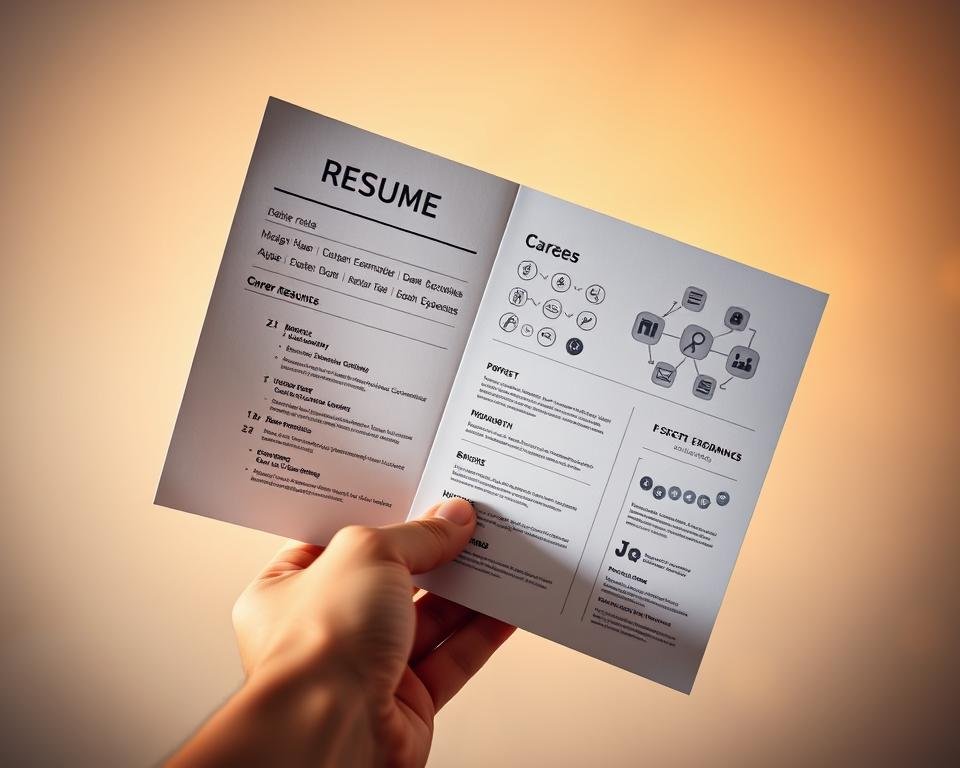
After understanding the job needs, I look at my career history. I pick out achievements and qualifications that match the job.
To show off my skills, I use examples from my past jobs. For example, if a job needs a certain software skill, I talk about my experience with it.
By making my resume fit each job, I have a better chance of catching the hiring manager’s eye. This approach shows I’m really interested in the job and ready to stand out.
Choosing the Right Resume Format
The right resume format is key to a successful job application. There are many formats to choose from. It’s important to know the good and bad of each to pick wisely.
Chronological vs. Functional Formats
A chronological resume lists your most recent job first. It’s great for those with a steady work history. On the other hand, a functional resume highlights your skills and qualifications. It’s good for those with gaps in their work history or changing careers.
Chronological Resume: Best for those with a stable work history, as it highlights career progression.
Functional Resume: Suitable for those with employment gaps or career changers, as it emphasizes skills over work history.
| Resume Format | Ideal For | Key Features |
|---|---|---|
| Chronological | Stable work history, clear career progression | Emphasizes work history, lists most recent experience first |
| Functional | Employment gaps, career changers | Focuses on skills and qualifications |
When to Use a Combination Format
A combination resume combines chronological and functional formats. It shows your work history and skills. This format is great for those who want to highlight their skills and work history.
Combination Resume: Ideal for those who want to highlight relevant skills and showcase work history.
Knowing the different resume formats helps you choose the best one. This increases your chances of getting an interview.
Crafting an Engaging Summary Statement
To stand out, you need a summary statement that shows off your achievements. This part of your resume is key. It’s often the first thing hiring managers see, and it can decide if they keep reading.
A good summary statement should focus on your biggest wins and skills. It should give the hiring manager a clear idea of what you can do for the job. It’s not just about listing your job duties. It’s about showing how you can help the company.
Strategies for Writing a Compelling Summary
To write a compelling summary, focus on your achievements and their impact. Here are some tips to help you:
- Use action verbs like “managed,” “created,” and “developed” to describe your achievements.
- Quantify your achievements by including numbers and statistics.
- Tailor your summary to the specific job you’re applying for, highlighting the skills and qualifications that match the job description.

Examples of Effective Summary Statements
Here are a few examples of effective summary statements:
- “Results-driven marketing professional with 5+ years of experience driving business growth through innovative campaigns and team leadership.”
- “Dedicated customer service representative with a proven track record of improving customer satisfaction ratings by up to 25% through effective issue resolution.”
- “Ambitious sales manager with a history of consistently exceeding sales targets and developing high-performing sales teams.”
These examples show how to use a summary statement to tell your professional story. They highlight your unique strengths and achievements. By following these tips and examples, you can create a summary statement that grabs attention and helps you succeed.
Highlighting Your Skills Effectively
Showing off your skills can really change how employers see you. Your skills are key on your resume. They show hiring managers you can do the job.
To show your skills well, know the difference between hard and soft skills. Hard skills are technical skills you learn in school or training. Examples are knowing a programming language or using certain software. Soft skills are about how you work and interact, like communication and teamwork.
Hard Skills vs. Soft Skills
Both hard and soft skills matter at work. Hard skills might get you noticed for a job. But soft skills make you stand out and help you do well in your role. For example, a coder who works well with the team is very valuable.
How to Showcase Your Skills in Action
It’s not just about listing your skills. You need to show how you’ve used them to get results. Here’s how:
- Use real examples from your job to show your skills.
- Include numbers or percentages to show what you’ve achieved.
- Make sure your skills match what the job needs.
For example, instead of saying “experienced marketing professional,” say “increased website traffic by 25% with targeted marketing.” This shows your skill and its impact.

By showing how you’ve used your skills in real jobs, you make your resume more interesting. It shows your experience and what you can do.
The Power of Action Verbs
Action verbs are key in resume writing. They help describe your achievements and duties well. Using them makes your resume lively and grabs the reader’s interest.
Why Action Verbs Matter
Action verbs show action and success. They make your experiences and skills clear and strong. The right verbs can change how hiring managers and ATS see your resume.
Choosing the right verbs for the job is important. Verbs like “managed,” “created,” “developed,” and “improved” are great for resumes. They highlight your achievements well.
Examples of Impactful Action Verbs
Here are some impactful action verbs for your resume:
- Managed a team of 10 people, resulting in a 25% increase in productivity.
- Created a new marketing strategy that led to a 50% increase in sales.
- Developed and implemented a new software solution that improved efficiency by 30%.
- Improved customer satisfaction ratings by 20% through effective issue resolution.

Using these verbs in your resume makes your story more engaging. Just remember to use them right and be clear about what you’ve done.
Education and Certifications: What to Include
Your education and certifications are key parts of your resume. They show your skills and knowledge. This section can help you get an interview.
Formatting Your Education Section
Start your education section with your latest qualifications. List the institution, degree, and dates. Also, mention any relevant courses or specializations.
Tip: Keep your education section simple and easy to read. For example, use: “Bachelor of Science in Computer Science, XYZ University, 2018-2022.”
Adding Relevant Certifications
Certifications can make you more credible, if they match the job. List your certifications, the organization, and when you got them. This is important in a competitive job market.

Focus on your education and certifications to strengthen your job application. The goal is to present this info clearly and briefly.
Dealing with Employment Gaps
Employment gaps are common in resume writing. They can be due to caring for a family member, further education, or health issues. It’s key to handle these gaps well to keep your job prospects strong.
How to Address Gaps in Your Resume
To lessen the impact of employment gaps, try these strategies:
- Be honest and direct about the gap.
- Highlight any relevant activities you did during the gap, such as volunteering, freelancing, or taking courses.
- Use a functional or combination resume format to shift the focus from your work history to your skills.
For example, if you took time off for family, talk about skills like time management. If you were in school, mention new skills or certifications.
Strategies to Make Your Experience Shine
To make your experience stand out, focus on your achievements and what you can offer. Here are some tips:
- Quantify your achievements by using numbers and statistics.
- Emphasize transferable skills that are relevant to the job you’re applying for.
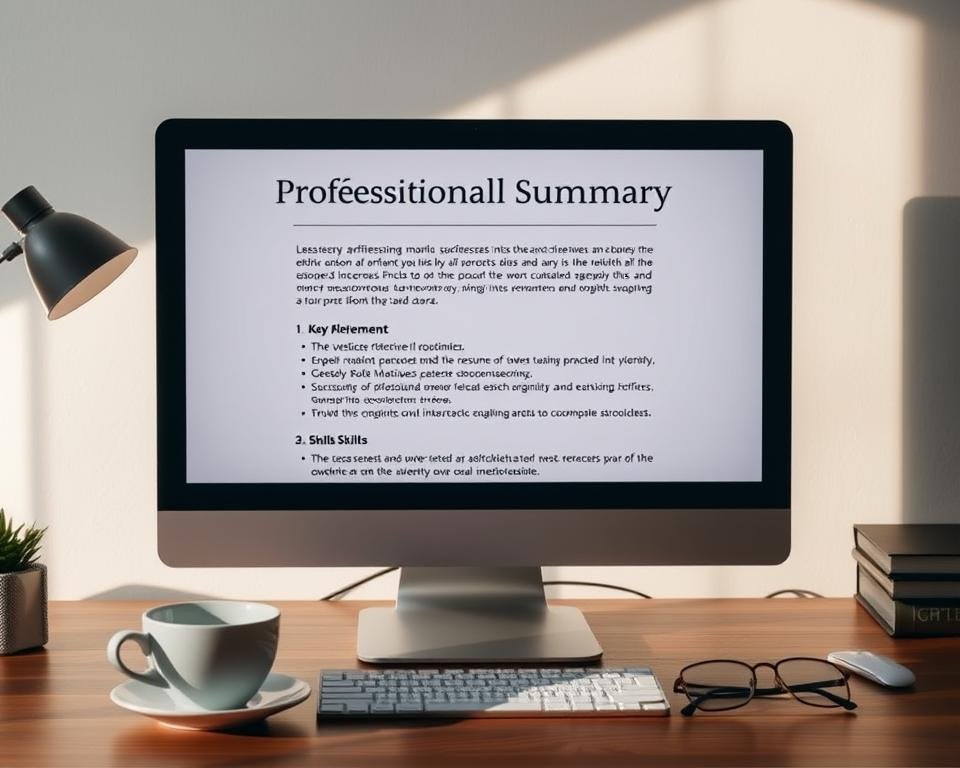
- Include a strong professional summary at the top of your resume to draw attention to your strengths.
A strong professional summary can change the focus from gaps to your abilities. For instance, your summary could highlight your relevant experience and skills.
Here’s an example of how to present your experience and gaps in a table format:
| Period | Experience/Gap | Skills/Activities |
|---|---|---|
| 2018-2020 | Employment Gap | Freelancing, Online Courses |
| 2015-2018 | Marketing Manager | Team Management, Campaign Planning |
| 2012-2015 | Employment Gap | Volunteering, Skill Development |
By organizing your information clearly, you can manage how employers see your employment gaps.
Designing Your Resume for Visual Appeal
Your resume’s look is key to grabbing employers’ attention. A good resume shows off your skills and work history clearly and simply.
Importance of Readability and Formatting
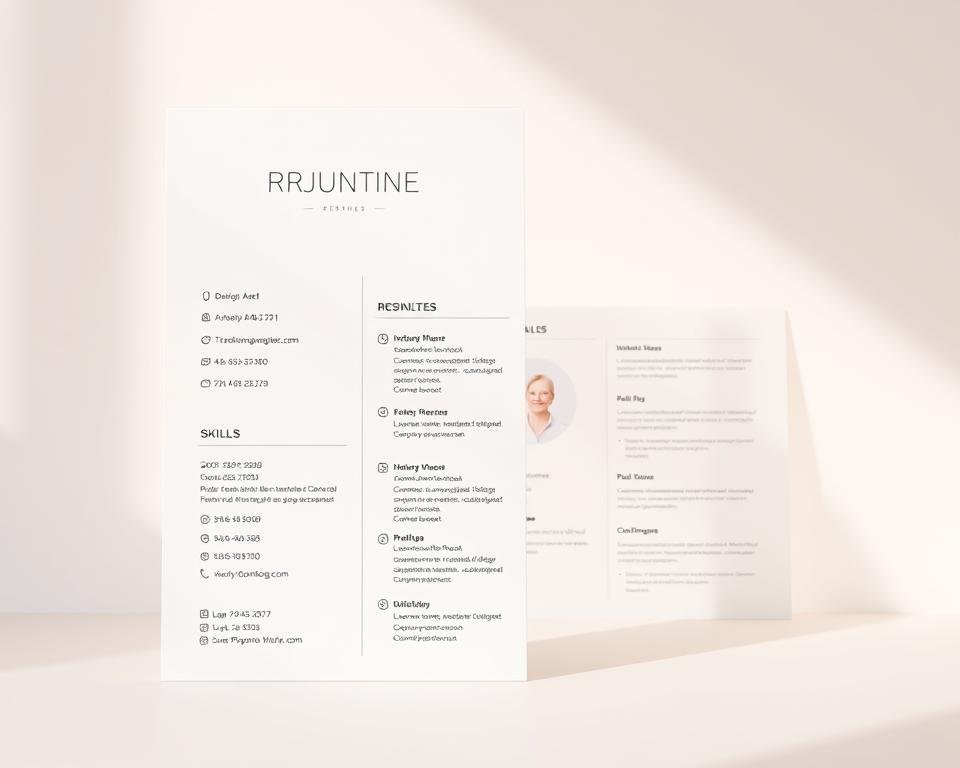
A readable resume is vital for a strong first impression. Choose a clean font like Arial, Calibri, or Helvetica in size 10 or 11 points. Proper formatting means using bullet points to highlight your skills and experiences.
Don’t forget about margins. Make sure your resume has enough space (at least 0.5 inches on all sides). This keeps it from looking too busy and makes it easy for the hiring manager to scan your qualifications.
Tips for Creating a Professional Layout
For a professional look, pick a consistent style for your resume. Use the same font and size for headings and keep bullet points consistent.
- Use clear headings to separate sections, making it easy for the reader to navigate your resume.
- Highlight your achievements by using action verbs and specific numbers or metrics.
- Keep your resume concise, ideally no more than one or two pages, to keep the reader engaged.
By focusing on readability and a professional layout, you can make your resume more appealing. This increases your chances of getting noticed by hiring managers and landing an interview.
Common Resume Mistakes to Avoid
To stand out in a competitive job market, it’s key to avoid common resume mistakes. A single mistake can make a bad impression on hiring managers. This might cost you the chance to show off your experience and achievements.
When writing your resume, paying close attention to detail is vital. Even small errors can hurt your credibility and show you’re careless. Let’s look at some common resume mistakes to steer clear of.
Typos and Grammar Errors
Typos and grammar errors are big no-nos on a resume. They suggest you’re not detail-focused or skilled at producing error-free work. To dodge this, always check your resume many times. Also, ask a friend or a professional to look it over.
Grammar and spell checkers can help spot and fix mistakes. But, be careful, as they’re not perfect and might miss some errors.
Overloading Your Resume with Information
It’s important to show your achievements and experience. But, too much info on your resume can be bad. Hiring managers have to look through many resumes, so keep yours short and to the point.
To not overwhelm the reader, focus on your most important achievements. Use clear headings and bullet points. This makes your resume easy to read and lets your best work shine.
By knowing these common mistakes, you can make a strong, effective resume. This will show off your experience and achievements, boosting your chances of getting an interview.
Keeping Your Resume Updated
It’s important to update your Resume often. This keeps it fresh and shows off your skills and experiences. As you grow in your career, your Resume should change to help you get hired.
Revise with Purpose
Update your Resume when you learn new skills or get new work experiences. This makes sure your Resume is always ready for new chances. Also, it lets you focus on the best parts for each job you apply for.
Benefits of Regular Updates
Updating your Resume often has many good points. It keeps you organized and sharpens your skills. It also makes sure you’re ready for any job that comes up.
