


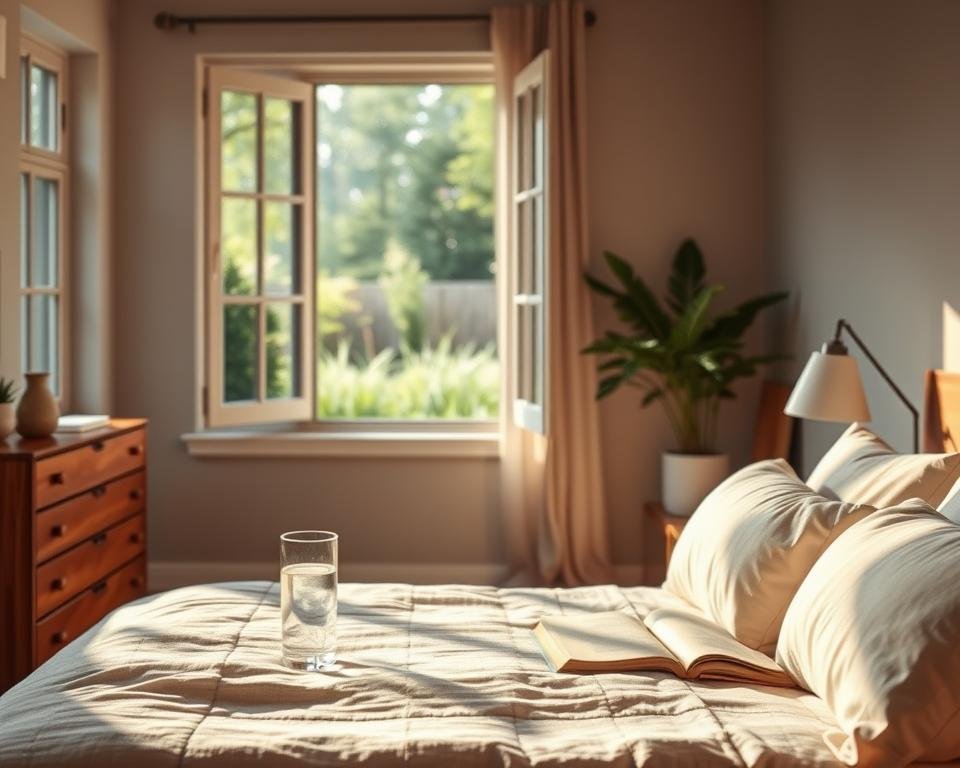
I’ve had my share of sleepless nights. But I’ve found some tricks that really help. Improving sleep hygiene is key for feeling good.
Simple changes have made a big difference in my sleep quality. I’ll share my tips on how to sleep better.
Key Takeaways
- Establish a consistent sleep schedule
- Create a relaxing bedtime routine
- Optimize your sleep environment
- Avoid screens before bedtime
- Try relaxation techniques, such as deep breathing or meditation
Understanding the Importance of Sleep
Sleep is key to our health and happiness. It’s not just a rest but a time when our body and mind work hard. This is why sleep is so important.
The Science Behind Sleep
Sleep has different stages, like REM and non-REM sleep. REM sleep is when we dream and our brain works like it’s awake. It’s important for learning and memory.
Non-REM sleep helps our body fix and grow. It’s when our body repairs itself. Knowing about sleep helps us see its value.
How Sleep Affects Your Health
Sleep is linked to many health areas, like how we eat and our immune system. Sleep deprivation weakens our immune system. It also affects our metabolism, raising the risk of obesity and diabetes.
Good sleep helps our body work right. It controls hunger hormones. Without enough sleep, we might feel hungrier.
| Health Aspect | Impact of Adequate Sleep | Impact of Sleep Deprivation |
|---|---|---|
| Immune System | Boosts immune function | Weakens immune response |
| Metabolic Health | Regulates appetite hormones | Increases risk of obesity and diabetes |
| Mental Health | Enhances mental well-being | Increases risk of anxiety and depression |
Sleep and Mental Well-Being
Sleep affects our mind, too. Poor sleep can lead to anxiety and depression. Good sleep helps us feel better and less stressed.
Studies show sleep problems can lead to mental health issues. Better sleep can help our mental health. This shows how important sleep is for our mind.
Identifying Your Sleep Needs
To improve sleep quality, first figure out how much sleep you need. Knowing this is key to a good sleep routine. It should fit your lifestyle and help you feel better.
Recommended Sleep Durations by Age
Sleep needs change with age. The National Sleep Foundation gives guidelines for each age group. For example, adults need 7-9 hours, and teens need 8-10 hours.
| Age Group | Recommended Sleep Duration |
|---|---|
| Newborns (0-3 months) | 14-17 hours |
| Infants (4-11 months) | 12-15 hours |
| Toddlers (1-2 years) | 11-14 hours |
| Preschoolers (3-5 years) | 10-13 hours |
| School-age children (6-13 years) | 9-11 hours |
| Teenagers (14-17 years) | 8-10 hours |
| Young adults (18-25 years) | 7-9 hours |
| Adults (26-64 years) | 7-9 hours |
| Older adults (65 years and over) | 7-8 hours |
Signs You’re Not Getting Enough Sleep
Not enough sleep can harm your health and daily life. You might feel tired, irritable, or have trouble focusing. You could also have sleep disorders like sleep apnea or insomnia.

Personalizing Your Sleep Schedule
Creating a personalized sleep schedule is important. It means understanding your circadian rhythm and adjusting your sleep times. Also, think about your lifestyle, work, and any sleep-affecting factors like travel or shifts.
By making your sleep schedule fit your needs and watching for signs of sleep deprivation, you can improve your sleep and health.
Creating a Sleep-Conducive Environment
Creating a bedroom that promotes relaxation can greatly improve your sleep hygiene. A well-designed sleep environment is key to better sleep quality.
Choosing the Right Mattress and Pillow
Getting the right mattress and pillow is a big step in making a sleep-friendly space. A comfy mattress supports your body, and the right pillow keeps your spine aligned. Think about the material, firmness, and loft when picking your mattress and pillow.

Optimal Room Temperature for Sleep
Keeping your room at the right temperature is important for good sleep. Studies show a cooler room is better for sleep, with a perfect range of 60°F to 67°F (15.5°C to 19.4°C). This helps keep your body’s temperature steady, leading to deeper sleep.
Reducing Noise and Light Distractions
It’s important to cut down on noise and light to make a sleep-friendly space. Use blackout curtains, earplugs, or a white noise machine to block out distractions. By controlling these, you can greatly enhance your sleep and set a consistent bedtime routine.
Establishing a Relaxing Bedtime Routine
To fight insomnia, making a calming bedtime routine is key. A steady pre-sleep routine tells your brain it’s time to relax. This gets your body ready for a good night’s sleep.
Activities that Promote Relaxation
Doing calming things before bed can make sleep better. Good relaxation methods include:
- Meditation and deep breathing exercises
- Reading a book or listening to soft music
- Doing gentle stretches or yoga poses
These actions calm your mind and body. This makes it easier to fall asleep. Adding a warm bath or shower to your routine also relaxes your muscles.

The Role of Technology in Sleep
Technology can both help and hurt sleep. Smartphones and tablets’ blue light can mess with sleep. But, some apps and devices can help you relax.
| Technology | Impact on Sleep |
|---|---|
| Smartphones/Tablets | Blue light emission can disrupt sleep patterns |
| Sleep Apps | Guided meditation and relaxation techniques can improve sleep quality |
| White Noise Machines | Can help mask distracting sounds, promoting better sleep |
Consistency in Sleep Schedules
Keeping a regular sleep schedule is vital. Going to bed and waking up at the same time every day is key. This improves sleep quality.
Tips for maintaining consistency:
- Set a regular bedtime and wake-up time
- Avoid napping during the day, specially close to bedtime
- Have a calming bedtime routine to tell your brain it’s time to sleep
By mixing a calming bedtime routine with a regular sleep schedule, you can lower insomnia and sleep deprivation risks.
Natural Sleep Aids and Supplements
Natural sleep aids and supplements can really help if you have trouble sleeping. There are many options out there. It’s important to know what works and how to use them right.
These aids are great for people with sleep disorders like insomnia or sleep apnea. Adding the right supplements to your routine can make your sleep better.
Herbal Remedies for Better Sleep
Herbal remedies have been used for centuries to help you relax and sleep better. Some top herbal remedies include:
- Valerian root, known for its calming effects
- Chamomile, a soothing herb that can help reduce stress
- Lavender, which promotes relaxation and calms the mind
You can take these herbal remedies as teas, tinctures, or supplements. Always talk to a healthcare professional before trying new supplements.
Role of Melatonin
Melatonin is a hormone that helps control our sleep-wake cycle. Our bodies make it naturally, but taking melatonin supplements can help too. Studies show that melatonin can improve sleep quality, mainly for those with sleep disorders.
When using melatonin supplements, pick a high-quality one and follow the dosage. Start with a small dose and adjust as needed. Always do this under a healthcare professional’s advice.
Foods That Promote Sleep
Some foods can also help you sleep better. Here are some sleep-promoting foods:
- Tart cherries, which are a natural source of melatonin
- Fatty fish, rich in omega-3 fatty acids that support sleep health
- Nuts and seeds, such as almonds and pumpkin seeds, which are high in magnesium and promote relaxation
Eating these foods can be a tasty way to support your sleep. A balanced diet, along with natural sleep aids and supplements, can lead to better sleep and overall health.
The Impact of Diet on Sleep Quality
What we eat affects our sleep more than we think. Foods and drinks can either help or hurt our sleep. This shows how diet and sleep are linked.
Good sleep hygiene means more than just a comfy bed and a calm bedtime routine. It also means watching what we eat, close to bedtime.
Foods to Avoid Before Bedtime
Some foods and drinks can mess with our sleep. It’s smart to skip:
- Caffeine in coffee and tea, as it keeps the brain awake.
- Heavy, rich, or spicy meals that cause stomach trouble.
- Chocolate, because of its caffeine and restlessness.
- Alcohol, which might make you sleepy at first but then messes with sleep later.

Best Foods to Encourage Sleep
Some foods can help us sleep better. These include:
- Foods with tryptophan, like turkey, chicken, and fish, which make serotonin and melatonin.
- Complex carbs like whole grain bread and cereals, which boost serotonin.
- Calcium-rich foods, like milk and dairy, that relax the body.
- Herbal teas like chamomile and peppermint, which calm us down.
The Role of Hydration
Hydration is key for good sleep. Not drinking enough can make us uncomfortable and disrupt sleep. But, too much water before bed can wake us up for bathroom trips. It’s important to drink the right amount during the day to keep our circadian rhythm and sleep quality in check.
By choosing the right foods and staying hydrated, we can improve our sleep. This leads to better rest and more energy for the day.
Coping with Sleep Disorders
Learning about sleep disorders and how to treat them is key. These conditions affect many people, making it hard to sleep well. This can hurt their health and happiness.
Common Sleep Disorders and Their Symptoms
Sleep disorders include many conditions that mess with sleep. Insomnia, sleep apnea, and restless leg syndrome are common ones.
Insomnia makes it hard to fall or stay asleep. Sleep apnea causes breathing to stop during sleep, with loud snoring. Restless leg syndrome makes you want to move your legs because they feel weird.
| Sleep Disorder | Primary Symptoms |
|---|---|
| Insomnia | Difficulty falling or staying asleep |
| Sleep Apnea | Pauses in breathing during sleep, loud snoring |
| Restless Leg Syndrome | Irresistible urge to move legs, uncomfortable sensations |
When to Seek Professional Help
If you can’t sleep well or think you have a sleep disorder, get help. A doctor can find out why you’re not sleeping and suggest treatments.
Look for these signs to get help:
- Persistent trouble falling or staying asleep
- Loud snoring or breathing stops during sleep
- Restless leg symptoms that mess with sleep
Treatment Options for Sleep Disorders
How you treat sleep disorders depends on the problem. For insomnia, you might try cognitive behavioral therapy or relax more. Sleep apnea might need lifestyle changes or a CPAP machine.

Restless leg syndrome might need to fix iron levels or use medicine to feel better.
Knowing about treatments and getting help is important. It helps manage sleep disorders and makes life better.
Mindfulness and Relaxation Techniques
Mindfulness can calm your mind and body, helping you sleep better. Adding these practices to your day can make your sleep quality improve.
Benefits of Meditation for Sleep
Meditation is great for better sleep. It lowers stress and anxiety, making it easier to fall asleep. Regular meditation can lead to:
- Reduced sleep latency: Falling asleep faster
- Improved sleep duration: Staying asleep all night
- Enhanced sleep depth: Getting more restful sleep
To start meditating, try short sessions of 5-10 minutes. Focus on your breath or a calming phrase.
Deep Breathing Exercises
Deep breathing exercises are also good for relaxation. They slow your heart rate and calm your mind. Here’s a simple way to do it:
- Breathe in deeply through your nose for a count of 4
- Hold your breath for a count of 4
- Breathe out slowly through your mouth for a count of 4
- Repeat for several minutes

Yoga Poses for Better Sleep
Some yoga poses can help you relax and get ready for sleep. Good poses include:
- Child’s Pose: Stretches the back and relaxes you
- Legs Up The Wall Pose: Calms your nervous system
- Cat-Cow Pose: Relaxes the spine and improves flexibility
Do these poses gently before bed to tell your body it’s time to sleep.
Incorporating Exercise for Better Sleep
Physical activity helps us sleep better. It boosts our health and sleep quality. The right exercise and timing can improve our sleep a lot.
Best Types of Exercise for Sleep
Aerobic exercises like walking, cycling, or swimming help sleep. They regulate our sleep patterns and quality. Yoga and stretching also relax us before bed.
Here is a comparison of different types of exercises and their impact on sleep:
| Exercise Type | Impact on Sleep | Recommended Frequency |
|---|---|---|
| Aerobic Exercise | Improves sleep quality, reduces sleep disorders | 3-4 times a week |
| Yoga/Stretching | Relaxes the body, reduces stress | Daily, specially before bed |
| Resistance Training | Can improve sleep quality, but may interfere if done before bed | 2-3 times a week, avoid before bedtime |
Timing Your Workouts
When we exercise affects our sleep. Working out too close to bed can make it hard to fall asleep. It raises our body temperature and wakes up our nervous system. It’s best to finish workouts 2-3 hours before bed.

The Link Between Physical Activity and Sleep Quality
Regular exercise boosts sleep quality. It lowers stress and anxiety, relaxes us, and sets our body clock. Adding physical activity to our day can greatly improve our sleep.
Key benefits of exercise for sleep include:
- Improved sleep duration
- Enhanced sleep quality
- Reduced symptoms of sleep disorders
- Increased daytime energy
Maintaining Healthy Sleep Habits
Keeping healthy sleep habits is key for feeling good. By making sleep a priority and sticking to a routine, you can sleep better. A good sleep plan is important for this.
Building a Long-Term Sleep Strategy
Creating a long-term sleep plan means knowing what you need and making your sleep space right. This helps you set a sleep schedule that fits you.
Tracking Your Sleep Patterns
It’s important to track your sleep to find ways to improve. By watching your sleep, you can change your habits for the better.
Adjusting Your Routine for Seasonal Changes
When seasons change, your sleep might need to too. Being open to changing your sleep habits helps you sleep well all year.
